Tuesday, October 21, 2008

Negombo

Tangalle spoiled me. Almost a week I did doing nothing except eating fresh sea food and rice with different curries, riding the bike along the coast and inland, reading, swimming and chatting with the manager, his family, the cook, the cook's brother and all the other lovely Sri Lankans who probaly because of some great karma in their past lives are living in this place now.


I visited Galle with its old Dutch fort, at night tried to spot turtles which supposedly come to lay eggs on full moon (not this time though) and explored some more beaches, caves and temples in the villages nearby.


Tangalle was so quiet and peaceful, it couldn't get any better than this. The way along the coast was pretty nice though. It was raining, but not heavily. There were those so-called "stilt fishermen" near Kogalla, sitting like sea birds on their sticks coming out of the water, then in Hikkaduwa there was a good Italian restaurant with capuccino and tagliatelle with prawns, and then as I was coming near the capital, I decided to skip the visit there, mainly because its suburbs started 20 kms before the city and looked like an infinite line of shops from two sides of the road congested with heavy traffic. It reminded me of Delhi, sort of, just smaller and cleaner. I didn't like it there. Shopping amidst exhaust fumes isn't for me. So I got back to this nice beach town, Negombo, spending my last few days here. Today I rented here a nice 250 cc bike and went north along the west coast, all the way to Puttalam and back. There weren't many attractions, it started raining heavily several times, but overall, it was a pleasant experience. There wasn't much traffic, the road was in great condition, so I drove from one coconut plantation to another (there is even something called "Coconut Research Institute"), stopped to pay respect to Shiva & Parvati in a beautiful Hindu temple and took a turn to some forgotten little Muslim village where the kids were pretty surprised to see me.


Sunday is work... ?

Monday, October 13, 2008

Tangalle

After leaving Kandy on a rented bike, I got to Dambulla, which is a site of Sri Lanka's historic heritage. It has 5 caves with many Buddha's statues and wall paintings. Although not as much impressive as Ajanta caves in India, it's a nice place. The rituals are alive, people come to put flowers in front of the sculpture of the Enlightened One and pray silently. Then I got to Sigirya, a Mazada-style royal palace on top of 200m rock. There are some beautiful frescoes on the wall, whose character suggest that the place was more for enjoyment rather than a military stronghold.


The bike had problems, and after returning it to Kandy, I got another one in Sigirya. I continued northeast, to Trincomalee, along a virtually empty road running through jungle-covered plains. There supposedly are some wild elephants and Tamil Tigers in the jungle, but I haven't seen neither of them. The soldiers stopped me a couple of times, probably wanted to practice English. Most of the times they just smiled as I went by. Trinco is a Tamil-dominated town, on the north of east coast. There are many South-India style Hindu temples, some Catholic churches. The people have view on the conflict from a different side. The military presence is quite heavy - there are many blockposts, some parts of the beach are off bounds, access to 1676 Dutch Fort is permitted only without camera. There are nice beaches north of town - Nilaveli and Uppaveli. Since the tsunami, the tourism hasn't recovered yet, so there are kilometers of sand in coconut with practically no one around. What a getaway. I liked it there. It struck me that this is the first time I see the sun actually appears from the sea... well, Dead Sea doesn't count.


The monsoon on the northeast coast was about to start, it was easy to notice the weather changed: afternoons became gloomy, with strong wind. I went south to Batticaloa, which involved a 200 km detour, because the coastal area is controlled by the Tigers. Then, south again along the coast, to Arugam Bay, known for its great surfing waves. It's actually another quiet fishing Muslim village that became one of these touristic spots, packed with guest houses and restaurants. The rainy season started all right, it poured and poured, and I'm not much of a surfer, so I got myself on the bike and got to the South Coast, finally, where the sky is still blue. I stayed in a town named Tangalle, right near the beach. Gonna get me another of those rice & curry... they're so good, and never taste the same.

Saturday, October 04, 2008

Kandy

After Nuwara Elia I went by bus to Haputale, which is a lovely village south east. It's located on a ridge and has beautiful views from both its sides. The place is a mix of Christians, Hindus, Muslims and Buddhists, which is typical to Sri Lanka. They seem to get together just fine, although according to history, sometimes violence erupts. Haputale is in a short distance from some nice places to visit. There are waterfalls, tea factories, a Benedictine monastery, a national park called Horton Plains which is much over-praised in the guidebook, although it's still nice. It's easy to spot some deers, monkeys, lizards and birds. A nice 35 km trip with motorbike, the road goes up the mountain through tea plantations and beautiful forest. The people along the way are extremely friendly, smiling and greeting, not annoying at all. An hour by bus from Haputale is Ella, another little village, and the views there are indeed amazing. Ella Rock, a 1.5 hour climb from the village, feels like the top of the world. A cool breeze compensates for the steep walk up. Yep, back in Kandy now. By bus, although it's supposed to be a great train journey. The trains are striking today. Bummer...

Monday, September 29, 2008

Nuwara Elia

It's been a while, but better late than never, right? So here I am, in a beautiful little town named Nuwara Elia, in the hill region of Sri Lanka. I've been in the country for five days. Arrived by a direct flight from Jordan, spent one day in a beach town of Negombo, close to the airport, to get the taste of the place, the people and a little bit of the Indian Ocean. Then I continued by bus to the hills, a town named Kandy, which is second in size in Sri Lanka, but is not that big really. There is a nice lake in the middle of the city, with many fish (fishing is prohibited though), water birds and some strange lizards. Facing the lake, there is a big Buddhist temple, which supposedly preserves the tooth of Buddha. The Tamil Tigers tried to blast the temple several years ago. The second city's attraction is the traditional dancing show. I decided to pass them both. There are really nice botanical gardens a few kilometers from the the city, close to the Peradeniya university, with many types of tropical trees, some of them planted by celebrities like Moraji Desai, Lord Mountbatten and even the first Soviet cosmonaut, Yuri Gagarin. In the middle of the park there is a huge fig tree which sprawls across 1600 sq. m, according to the guidebook. Also, there are collections of palms from all over the world, giant bamboo, cactii, fruit trees, few herbal gardens, and a beautiful orchid house, with some amazingly colored flowers. I never knew some of the trees actually exist, like a cannon ball tree, for example.


An hour ride from the town, there is an elephant orphanage, which became a really big attraction both for locals and for foreigners. There are dozens of elephants there, big and small. Their daily routine consists of feeding, bathing in the river and posing to the photographs. It's not really like a zoo, they are pretty much free to go wherever they want in a huge area. Very cute.


After Kandy, I went to Nuwara Elia, a former British hill station, elevated 1900 m above sea level. It's like a tea land around, plantations everywhere, the air is very clean and pleasant. The temperature is cooler than below. The weather is great, especially in morning, when the views from the hills are amazing. In afternoon, the hills get misty, but it doesn't become cold, at least not this time of year. The town still has an atmosphere of British presence, with wooden mansions, golf course and Victoria park. The president is supposed to visit the town next month, so the school children make repetitions for a welcome ceremony, including drums, flutes and marching.

My impression of the people is very good so far. They are very hospitable, kind and polite. They're not pushy, even if they're dependant on the tourists' money. Always smiling and greeting. Pretty much like India, but not spoiled yet, maybe because they don't see much tourism because of the war. The roads are in excellent condition, so it's comfortable to travel by bus, although they're still Tata and sometimes they get very crowded.

Friday, January 26, 2007

Bangkok #2

I spent the rest of my stay in Myanmar in some places not too far away from the capital. First, I made a little Buddhist piligrimage to Kyaiktiyo (which is pronounced like Chai-ti-o, no idea where all the k'-s came from), also known as Golden Rock. The rock is miraculously balancing on the edge of precipice, some even say floating in the air. From the start it sounded like a lot of crap, but I did it just for the 4 hours mountain hike. I started from Kinpun, a village with cheap guest houses and souvenirs market. Beside the usual t-shirts and necklaces, the souvenirs that are popular with locals to bring back from the piligrimage include models of various shooting weapons, made of bamboo, but still looking very intimidating, especially when carried by fighters with thanaka-covered faces.


The numerous food and drink vendors on the way are not too agressive, and surprisingly there isn't as much garbage as in some other important religious sites. The way is steep but nice, some beautiful views of the valleys below the ridge are revealed after a while.


While approaching the rock itself, my first impression was that a bunch of people are trying to test its miraculous balance by pushing it off the mountain. Actually, all these people are male devotees that apply stickers of golden paint to the rock surface. The women aren't allowed to approach the rock (even the magic has its limits) and make the prayings and meditation from a safe distance. The area around consists of restaurants and resthouses for piligrims, monasteries, many small temples where one can see the strange combination of Buddhism and Myanmar's traditional beliefs in nats, the guardian spirits. There are 37 of them, and together with Buddha's, that makes a lot of statues in the temples. Instead of hiking the way down, I decided to take a truck, which is the only allowed mean of transportation to and from the rock. The trucks are packed with 40 people, and needless to say, the benches are not designed for foreigners with long feet. Luckily, it's only a half an hour ride down.
My last destination was Chaungtha beach, a strange place.


Beatiful and long strip of white sand and coconuts, few budget guest houses and many luxury hotels, and more under construction, but looks like all this variety of accomodation is empty most of the time. Locals seem to visit on weekends mostly, and spend the time getting inside the water fully dressed and floating on tubes near shore. There are some monks hanging around, some of them look also like on family vacation, with cameras and all, and some walking around the guest houses, probably only the ones with foreigners, collecting 'donations'. I have to admit, that the pagodas on the beach facing the ocean, make the monk's life look pretty attractive.


The shopping opportunities in this place include many kinds of dried sea food, jewelery made of shells and bamboo strips hats. North from the hotels area there's a rocky area, where poor locals break rocks to build roads, followed by another beach, where there's nothing but coconuts and white sand. Anyway, Chaungtha is definitely not the usual backpackers beach, but is a nice and quiet place after all, with good accommodation and food. There was nothing more to do, except buying souvenirs in Yangon markets, getting the last opportunities for cheap and good Indian food and saying good bye to Myanmar.
Now in Bangkok, spending the last days of this trip...

Saturday, January 13, 2007

Yangon

I liked the Cambodian south coast. Stayed one night in Kep, a small once-beach-resort, which still has many badly damaged villas. From there I rode by boat to Koh Tonsay (Rabbit Island) which is a few kilometers from the coast, and spent 3 days there. There are some fishermen families on the island, which have basic bungalows for stay and cook fresh seafood. The prices are a bit high, but the portions are really generous. Most of the tourists come for a half-day boat trip from Kep, few stay for longer.


There was a circus band from Battambang staying on the island in tents for one night, they invited us, 3 tourists, to drink with them. The Cambodian drinking is unstoppable. It's impossible to have an empty can with them. Very funny people and very courteous also, even if drunk. The island was rather small, only a couple of hours to walk around the coast, but there's a mountain on the middle, covered with jungle, and it's unexplored and wild. There are also some islands in sight distance from Koh Tonsay, some have little houses, but the whole are is not developed yet. After getting back to mainland I headed to Sihanoukeville, which is a port town further west. Lots of tourists come there, because of great beaches in the town and nearby. The popular ones can get pretty busy and noisy, but still there are several kilometers of white sand with practically no one around. There are motorbikes for rent in town. I spent a nice time in Otres beach, 6km from town, just getting back to eat in the market, which is always cheaper.


My visa ran out on December 22, I took a fast boat, more like a rocket to Koh Kong, on Thai border, and got pretty lucky catching a 7 pm bus from Trat to Bangkok and arriving at midnight. It's good Kao San road is open till late.
My flight to Yangon was at Christmas. Arriving to Myanmar felt so different from Bangkok. With so many Indian faces around, the old English colonial buildings, chai and chapati stalls, men chewing and spitting betel, Yangon felt a lot like some Indian city. But still it was a different story. There were so many new and surprising things. Women and kids wearing a kind of sandalwood makeup, covering their cheeks and sometimes all the faces with a yellow paint, it looks funny on the young ones but reminds of Chinese horror movies in some cases. Most of men wear loungyi, kind of sheet they wrap around their waist and knot in front. There are many Buddhist pagodas, called paya in Burmese and look like huge golden bells. There're many Buddha statues inside, and their worshiping again reminded me of Indian devotees.


Most of the cars on the streets are very old. Unlike in India, in Yangon horn sounds are almost never heard, and there are no motorcycles or bicycles, but this only in Yangon.


The pavements of downtown are full of merchandise, most of it clothes, sunglasses, jewelery and food stuff. After 2 days in the capital I got some feeling of traveling the roads of Myanmar. My first destination was Kalaw, a hill station in Shan state, a 17 hours ride from Yangon. It was very early morning when I arrived there, very cold, and I was lucky to keep some warm stuff from the Himalaya trekking. The town is a starting point for several trekking routes, the most popular and easy to arrange is the one to Inle lake, which takes 2.5 days. Walking isn't strenuous, we were a group of four tourists, and two locals - a cook who fed us with delicious meals 3 times a day and a guide who knew just everything about the area and was willing to talk. The area is all hills covered with pines and bamboo forests, rice, wheat and condiments plantations, cherries and avocados, really beautiful and colorful scenery, especially when looking from above.


The people in the villages we walked through were mostly of Pa-O tribe, and we got a glimpse on their life, staying in one such village for a night.


Seems like farming is their main source of income, although the poppy plantations are not far away, but these are off limit, unfortunately. The second night we spent in a monastery, where the oldest monk was about 20 years old, he was in charge of running a community of more than a hundred kids, who seemed very mature and independent, some of them only 5 years old but working and helping along with others. It's strange to see them, wearing just a piece of red cloth and walking barefoot in the chilly mornings, while we cover ourselves with socks and sweaters. Lots of boys become monks in Myanmar, usually the family sends every boy for a 7-days trial period, and it's completely up to him if he wants to stay or no. Some of them, even really small, make the decision to become a monk independently. We arrived to southwest end of Inle lake on noon of the 3rd day and took a boat to Nyaungshwe village, on the northeastern side, where all the guest houses are located. The lake is long and wide. The area around is inhabited mostly by Intha people who are very much dependent on the lake's natural resources and on tourism. That's why the main tourist attractions are the markets in the villages around. The ride on the lake is quite an experience, I especially liked the local fishermen with their unique work technique. They use their foot to row the oar, which leaves one hand free to handle the net. Others use some kind of conical baskets that they dip in the water, using their foot again. All these things are done by slow smooth motions and it's like watching some kind of ritual performance.


Nyaungshwe was a nice place to stay. We arrived on New Year's eve, and the locals made quite a party, for their standards, staying awake after midnight for singing with guitars and drinking large quantities of beer and whiskey with foreigners. The next day we went for a boat trip around the lake, most of it was quite commercial, but it's understandable that people, who are generally poor in the country, are eager to use the opportunity for getting some money from tourists. Except the markets and the shops, one stop we made was in Nga Phe Kyaung monastery, which is also known as the 'jumping cat' monastery. The monks living there taught some of the numerous cats that hang around to jump through a ring, and this way the place became a really hot attraction for foreigners. Seems like meanwhile the cats got really bored with this lifestyle and we witnessed only one of them jumping reluctantly, and only once, in spite of all the persuasions. After Inle a decided to get back to Kalaw, because I preferred the more quiet atmosphere there. The ride was a lot of fun on the roof of a pick up. In Kalaw, following an advice our trekking guide gave me, I went to get some traditional Pa-O massage, made by a 9-fingers master named Sok Thein. I asked him to make it strong... if he had 10 fingers I thought I wouldn't survive it. But it felt really good afterwards. He was surprised to see a foreigner getting it in the old Pa-O way. He said afterwards that he felt really weak and needed to eat 3 plates to refill the energy.
From Kalaw I got another terrible bus ride, this time to Mandalay. The city was a royal capital before the British rule, and the royal palace, surrounded by a long moat and a wall, is in the center. Foreigners are supposed to use only one entrance, from the east, and walk along only one road towards the palace compound, located in the center. The palace is rather boring, the buildings are empty and there's not much to see there. Going back, I got off the permitted road to take a look on the tomb of King Midon, but an old smiling soldier on a bicycle caught me there and politely but persistently showed me the way back to the road. Mandalay is a religious center for Myanmar Buddhism, the Mandalay Hill is a home to many pagodas with innumerable Buddha statues, and there's also a whole monk district, which is quite pleasant with its quietness after the traffic mess in downtown. There are also many pagodas all over Mandalay, most of them look pretty much the same, like all temples do after seeing quite a lot of them. I didn't really enjoy the time there, so I got back on road, to Bagan this time. Unlike Angkor in Cambodia, Bagan impresses with the quantity and not the quality of its temples, and it's much quieter than Angkor, even in high season. There are thousands of temples, and there are more under construction. Apparently, many of country ruling generals and wealthy people think that they will make a very good karma by ordering a new red-brick structure. The sunrises and sunsets are very nice, when all the plain, covered with forest of temple peaks can be seen under an amazing color show in the sky.


I didn't find much special to see in the interior of the temples, although I didn't see many of them. Some have murals, usually in poor condition. Almost all have big sitting Buddha statues, some have reclining and standing ones. The villagers of the area are of course very much dependent on visiting tourists, producing paintings in the style of the temples' murals, lacqueware and textiles. It doesn't look like there's much of farming, the land in the area seems to be very dry. A nice day to break the temples routine was to ride a pick-up to Mountain Popa, a very holy place for Myanmar Buddhists. Approaching the mountain gives an opportunity for quite a sight. Mt. Popa looks more like a cliff, covered with golden payas, coming out from a slope of a much larger mountain. The view from the top is nice, but the pick-up stays there only for until 1 pm before coming back to Bagan, so I couldn't really appreciate the sunset, when all the Bagan plain is supposed to be seen on the west side. One more day exploring the surrounding area on bicycle, and after getting enough temples (again) I came back to Yangon.

Monday, December 11, 2006

Kampot

Having enough temples I headed back to Phnom Penh, making it through Battambang this time. This town was cheap, nice and quiet, with French mansions along the river bank. There's plenty of peaceful countryside around, with some mountains standing among rice fields. The mountains are important and sacred to Khmer, since most of the country is plain. Many of the mountains have wats (monasteries) on their top. During the Khmer Rouge some caves in the mountains were used to throw in the bodies of their victims, these days the bones and skulls were collected and presented to visitors with a request for donation. It's not easy.
Coming back to Phnom Penh I still hadn't enough stamina for sight seeing in the capital and after a couple of days left for the south. The town of Kampot is a quiet place on the river, again the French boulevards with shattered overgrown yellow buildings - after seeing plenty of these places in Lao and in Cambodia, it still has its charming effect. The town is near Bokor mountain. Only the French would think of an idea to bring elephants and cut a road right through the thick jungle bushes, all around the slopes, to the plain uphill where they built a 3-storey hotel-casino watching all the Gulf of Thailand, a church, and some mansions. All that is left of the buildings is just the outside. There're remaints of a big cannon platform just above the church, made in China and served the KR to exchange compliments with the Vietnamese who took the opposite hill, with the hotel... The wind is wild up there, going through the empty rooms with a wail... It's a ghost place, the spookiness comes with a beatiful scenery and this makes it a one of a kind experience. All the forest covering Bokor mountain is declared as national park, and there supposed to be plenty of wildlife, but I've just seen birds, many though.
Tuesday, December 05, 2006

Siem Reap

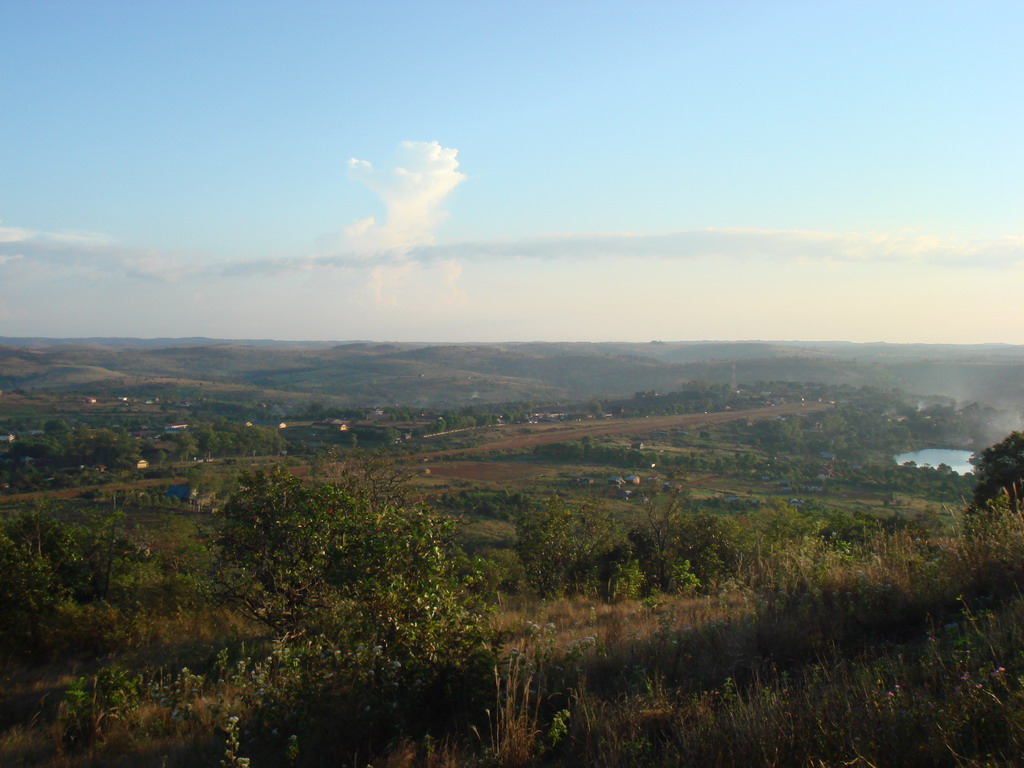
After spending an afternoon in Kratie, I moved east to the beatiful forested hills of Mondulkiri. The capital of the province, Sen Menorom, is really a village, with a lot of interconnecting trails going around the hills. The weather can be quite chilly in early morning and becomes hot in daytime.


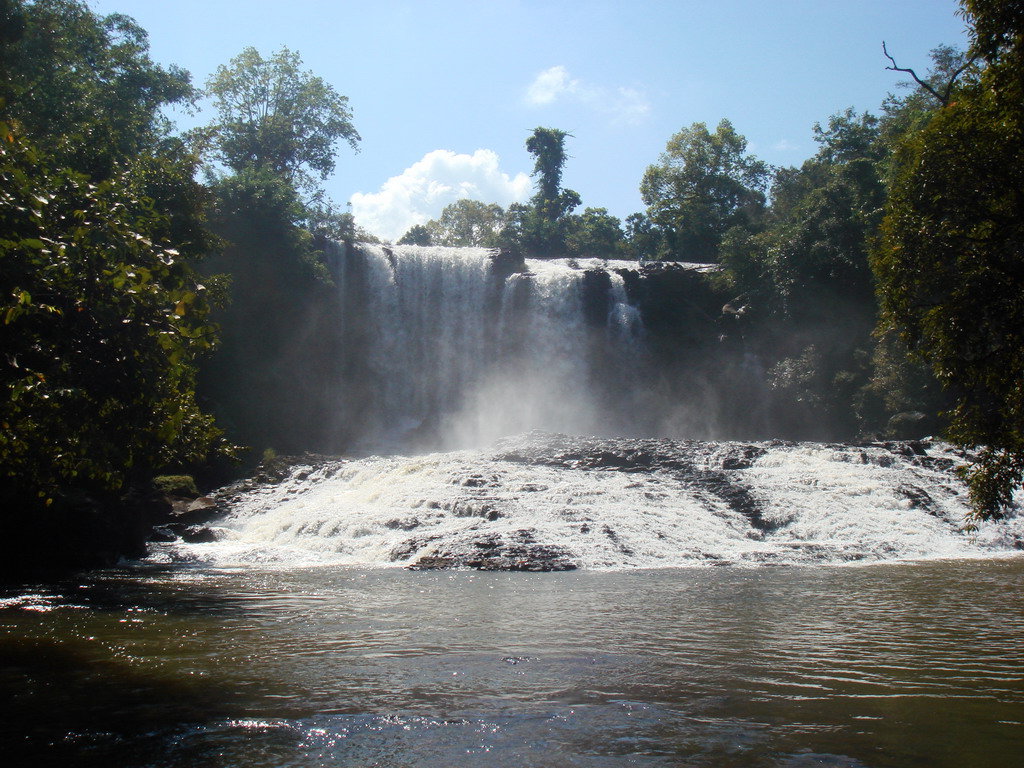
Very quiet place, it's probably just before the tourist boom will hit it, because the scenery around is amazing. The hills are either covered by grass or by jungle, with lots of waterfalls, some of them quite difficult to reach. The road to Boo Sra waterfall, 40 kms northeast of town, is ok most of the way, ang gets pretty bad towards the end. It's worth the journey, though. The waterfall has two levels, and is very impressive. It's possible to walk above the top, between the floors, and go down to the bottom. Jungle is all around, birds are pretty rare to spot, but big butterflies are in abundance, so are dragonflies, red ants and those cool little bugs that slide on the water.


After enjoying few days biking around the hills I took a bus to the capital, Phnom Penh. After several weeks in countryside the noise came as a surprise. The most common question is 'You want motorbike, sir? ' coming from hundreds of bored moto drivers. But, on the afternoon I got also something like 'You want shooting, sir? Not far away, near the Killing Fields.' I decided to leave it for some other time. I decided to get some Angkor stuff and took off. Stopped on the way in Kompong Thom. There's a complex of ancient Khmer ruins near the town, called Sambor Prei Kuk. There's not much left of the red brick temples to see, but it's located in a forest, so it's a nice walk. Next day I arrived to Siem Reap, a village that has grown out of proportions with hotels and restaurants, thanks to its location near the Angkor temples. The Angkor park is a very busy place, but still beatiful. Just need to get up early, come to Bayon temple around 6 a.m. and be greeted by all these smiling faces...

Saturday, November 25, 2006

Kratie

The roads infrastracture of Laos is still in poor condition. The only way to reach many remote villages is still by boat. It's pretty expensive, unless several people share the boat. After taking a pick-up truck from Luang Prabang up north to Nong Khiaw, I decided to go to a small village of Muang Ngoi, further north on the river. Travelling against the current was rough, at some point the boat hit the bank on river, and the driver took off his clothes, staying only in underwear and ran back and forth on the boat, bringing tools and fixing the navigation, while the passengers grabbed the branches of a bush on the bank to prevent the boat from flowing away. Seemed it wasn't the first time the driver had to deal with this situation, and after half an hour the boat sailed on its way. The village of Muang Ngoi is completely isolated from the main roads, and the loudest sounds are of boats' motors and roosters' cries at morning. The weather is pleasant, at morning even cold, lots of mist cover the mountains near the banks. The scenery around is very beatiful, Lao farmers in pointed hats working in rice fields, small picturesque villages with traditional wooden houses, surrounded by jungle crossed by streams and caves nearby. Trekking around is very easy, since most of the trails are flat. After staying there for 2 days, I was planning to go further north on the river, but there was no "local boat" scheduled, so next time I guess... Made the same way back south, stopping in Luang Prabang and Vientiane to break the long bus journey, for some Beerlao on the bank of Mekong river. Next place was Savannakhet, a French ghost town, reminding of the capital a little bit, with its shattered colonial buildings, but much more quiet. Not much to do there. The guest house was very nice, with a wooden veranda and a balcony, with 2 old bombs fuses. It's really no problem finding souvenirs like these around. On average, US poured on the head of every Lao citizien more than half a ton of explosives! Next day, Pakse. Around: waterfalls, coffee plantations, and lots of friendly people. After a couple of days there I took a boat down the Mekong to Champasak, a nice village located close to Wat Phu, which is a complex of ancient Khmer ruins. It's probably not as impressive as Angkor Wat in Cambodia, but it's nice, since in Laos there aren't many ancient sights. The complex has 3 levels, connected with steep naga (serpent) stairway, with the national Lao trees providing some shade from the sides. The temples themselves aren't very impressive, but the view from the upper level to the complex downstairs, the pools near the entrance and the villages on the plains is stunning. There's a sacred spring coming from the mountain and a few big boulders with carvings are scattered around. Worth the afternoon.


Moved further south, to an area called Si Phan Don, or 4000 islands. I stayed in a bungalow on Don Det island, watching beatiful sunsets over the Mekong, walking around the rice fields, playing with local children and jumping from the veranda to the Mekong for a nice dip in hot afternoon.


After running out of kip (Lao currency), I decided to cross the border with Cambodia, which is only 20 km south. Crossing is very easy, after putting $1 bill in the passport for the nice Cambodian officials. The closest town to the border is Stung Treng, from where I took a bus east, to Ratanakiri province. The roads in Cambodia, if they're not brand new, are in VERY bad condition, not to mention the red dust which covers the clothes and the skin with a thick layer. Fortunately, respiration masks are sold everywhere, and they're essential for motorbike travelling, so are sunglasses. After arriving to a dusty town called Ban Lung, I explored the surroundings, which include a beatiful crater lake, several waterfalls and ethnic villages, where people still sacrifice animals in case of problems. The Cambodians are very friendly, considering the horrors which they were passing through just until recently. The monks are especially glad to get a foreign visitor, they are eager to practice their English, and are extremely hospitable.


Education is considered very important and it's good to see there are schools in most of the villages. The poverty is much more eye catching though, although there are lots of 4WD navigating the bad roads, most people are definitely very poor.

Tuesday, November 07, 2006

Luang Prabang

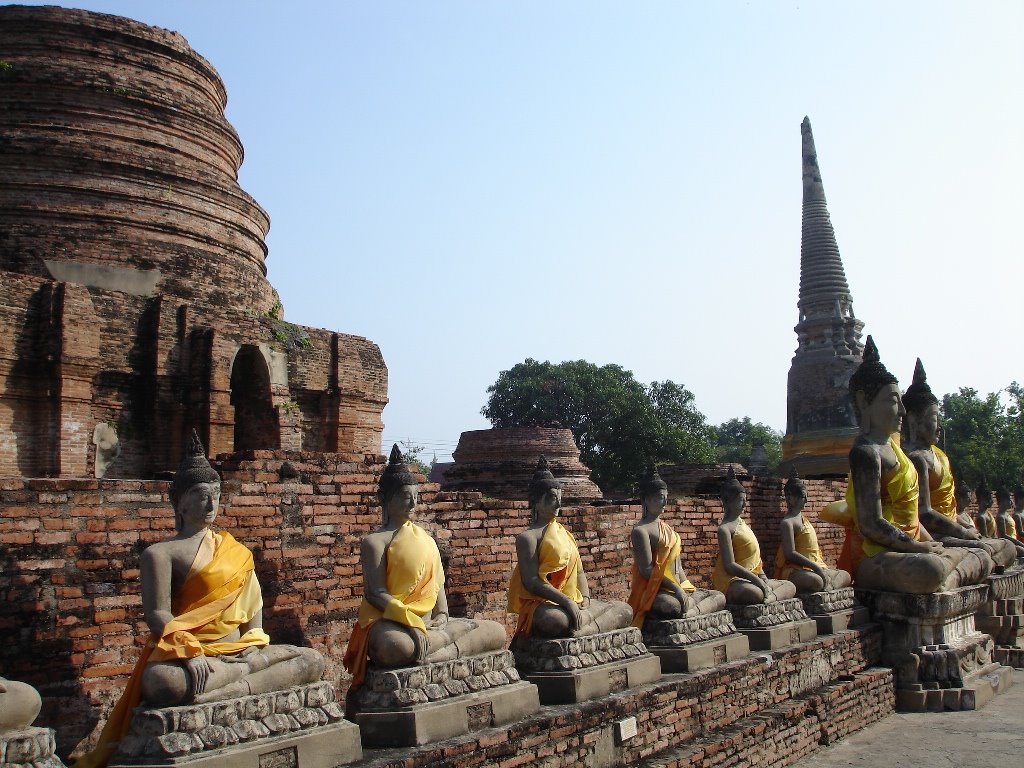
While waiting for my visa to arrive, it was hard to stay in Bangkok. Made one day out, in Ayutaya, former Thai capital, sacked by the Burmese. It's spread over huge territory, with red-brick stupas and temples, statues of Buddha, sitting, reclining.


The place is nice, but very tourist-oriented, probably because it's near Bangkok. I didn't explore Thailand this time, but after a week it felt very commercial.
Immediately after arriving in Laos the atmosphere is different, the life flows in its slow patient way, there's no need to rush things. Vientiane is a sleepy capital, more an urban village. The communism is funny because the mentality of people is not to make noise and be content with the small pleasures. They're very sympathic.


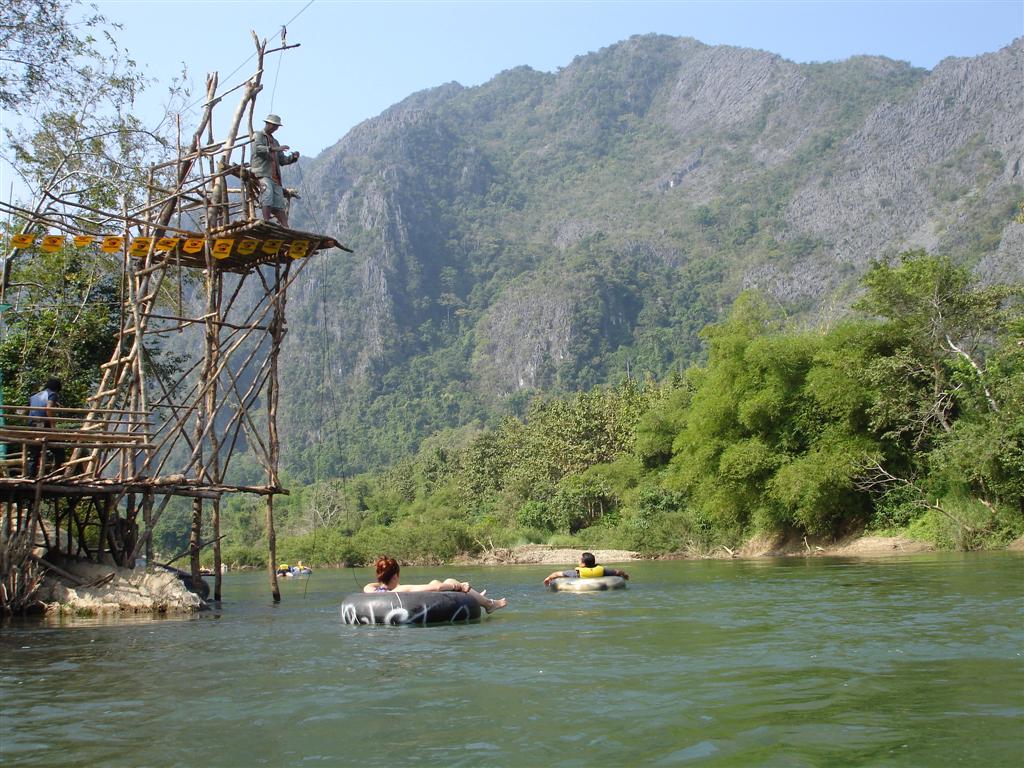
The capital is located on the coast of Mekong river, la promenade is full of food and drink vendors. There are also a lot of temples, although there's communism, and monks everywhere. The biggest city can be explored in one day. About 160 km north - Vieng Vieng, a village near Ham Son river. The main street is just a pack of guest houses combined with TV restaurants, where episodes of "Friends" are running all day long, with pretty much success it seems. The river is very nice, good to swim, cool and clear water. People float along the river, in inflated tractor tubes, it's called 'tubing'. On the way there are jumping towers and small cafes.


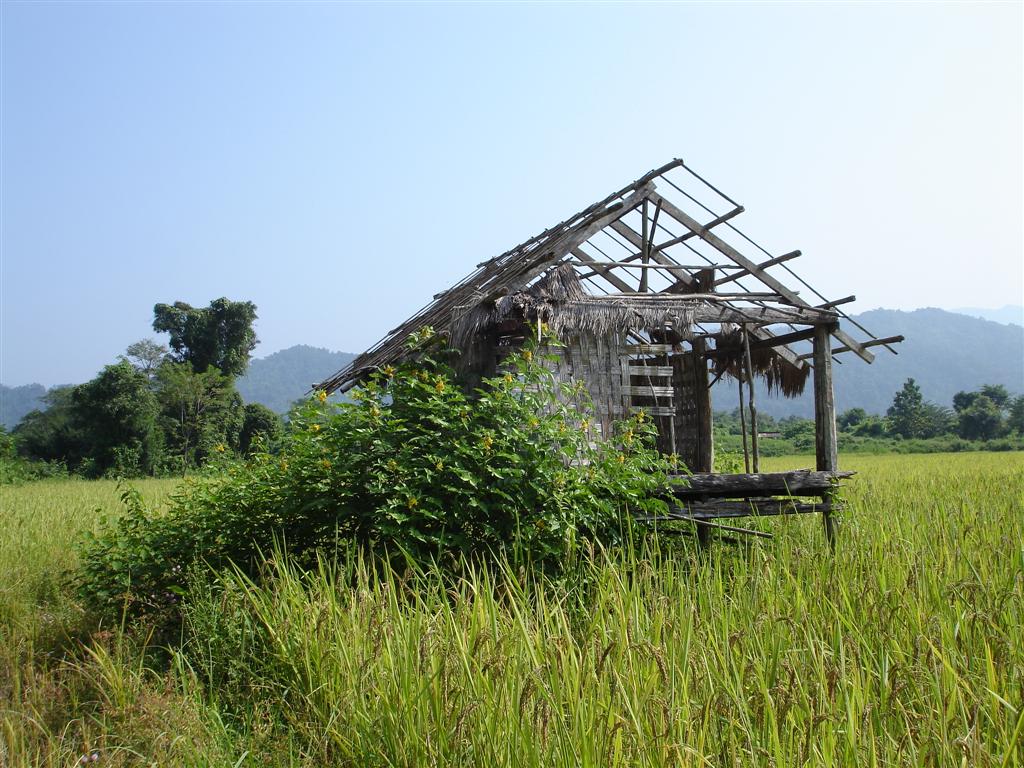
Motorbike is possible to rent in the village and good to explore around. Beatiful countryside with banana plantations and rice fields.


On the other side of the river - wicked mountains covered with thick jungle, with caves, some of them are very deep and going a long way, with Buddha statues, stalactits, big underground pools of water, strange fish etc. Very nice. Next place along the Rte 13 up north - Luang Prabang, very charming French colonial town. Lots of temples, beatiful night market with clothes & handicrafts. Morning market also very nice, selling frits & vegetables, live and dead fish and animals, insects, spiders, frogs and snakes. The town is pretty small, but not boring. The French villas, together with traditional Lao wooden houses, create a very enjoyable and unique atmosphere.

Thursday, October 26, 2006

Bangkok

It's only two hours flight from Kolkata to Bangkok, but the difference is huge, it looks like another planet. Shit, I thought Kolkata was a modern city! Guess 8 months in India got me completely out of proportions. I forgot completely about girls in mini-skirts, clean streets (no cows, now they're in the menu), skyscrapers, girls in mini-skirts, new age electronics, supermarkets and shopping malls... Did I mention the girls in mini-skirts? Damnt, they're beautiful! Although some of these dolls hang hand by hand with ugly looking Westerners, I guess not for the purpose of discussing quantum physics... Well, what to do, all this city is one huge shopping centre, everything's for sale. So I found myself in a state of some shock, which was much more overwhelming than after landing in India. I can manage it though :) Bangkok is nice, in a modern city's fashion. I really enjoyed the Sky train. It goes above the city's pagodas, palaces, monuments, parks and bridges; the stations and the cars are spotless. If there was one like this in TA, then it would be almost like here. There's already lots of Thai people in TA. The people are smiling and nice, willing to help although their English pronunciation is hard to understand. It was surprising to see lots of obese people on the streets. In India it's a rare sight, most of the people are slim and a belly is often a sign of a comfortable job with steady baksheesh incoming (police & government). Here I guess it's a sad result of Coca Cola world domination program. Food stalls are everywhere, cooking all kinds of meat, vegetables and noodles. Although they're Buddhist, the Thais are definitely not vegetarian... Of course, sight seeing is a must, all these pagodas and palaces. The train connects with a river, which has boat service, with piers close by to the important sights. The first place I went to was Wat Pho, it was really the only place I knew about in the city, except Kao San road. 1 hour of Thai massage fixed me the sens that got messed up in a sleeper coach from Varanasi to Kolkata, where I had to share a bed with 3 Indian soldiers (nevermind). It's good to feel a neck again. After 2 days I moved to Kao San, the backpackers' area. Lots of jewellery, piercing & tattoos, music, clothes and etc. Now I'm just hanging around, waiting for visas for Laos and Cambodia to arrive. When I'm done with that, I'm outta here! Shopping's not for me.
Sabai dee :)

Friday, October 20, 2006

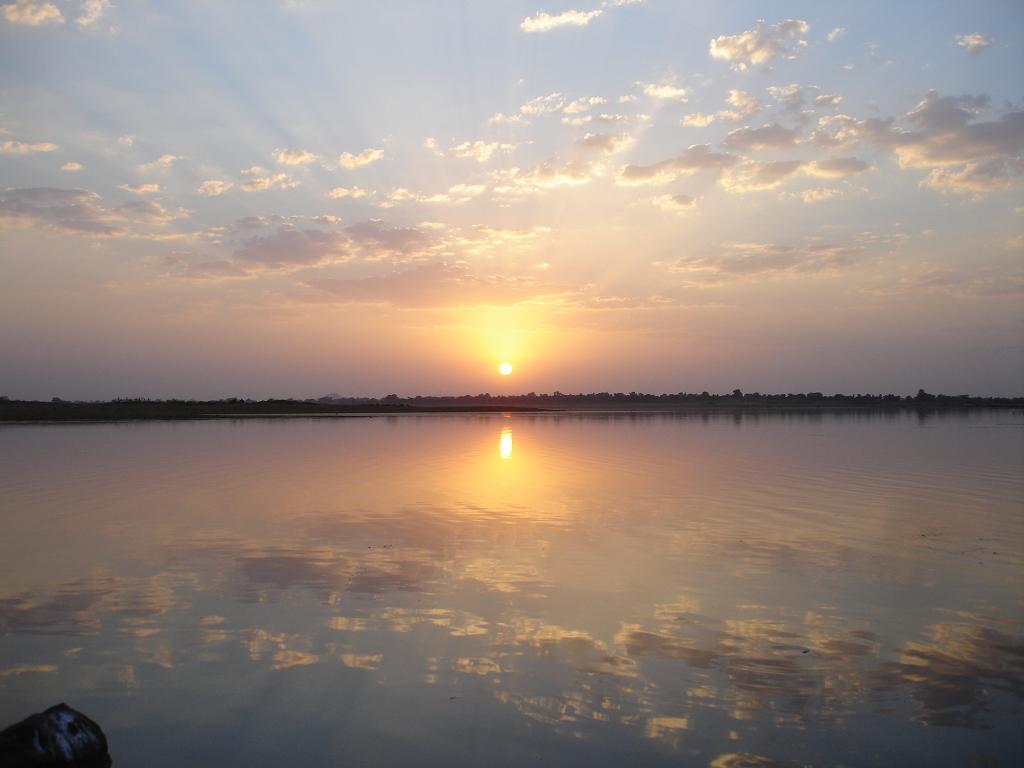
Varanasi again

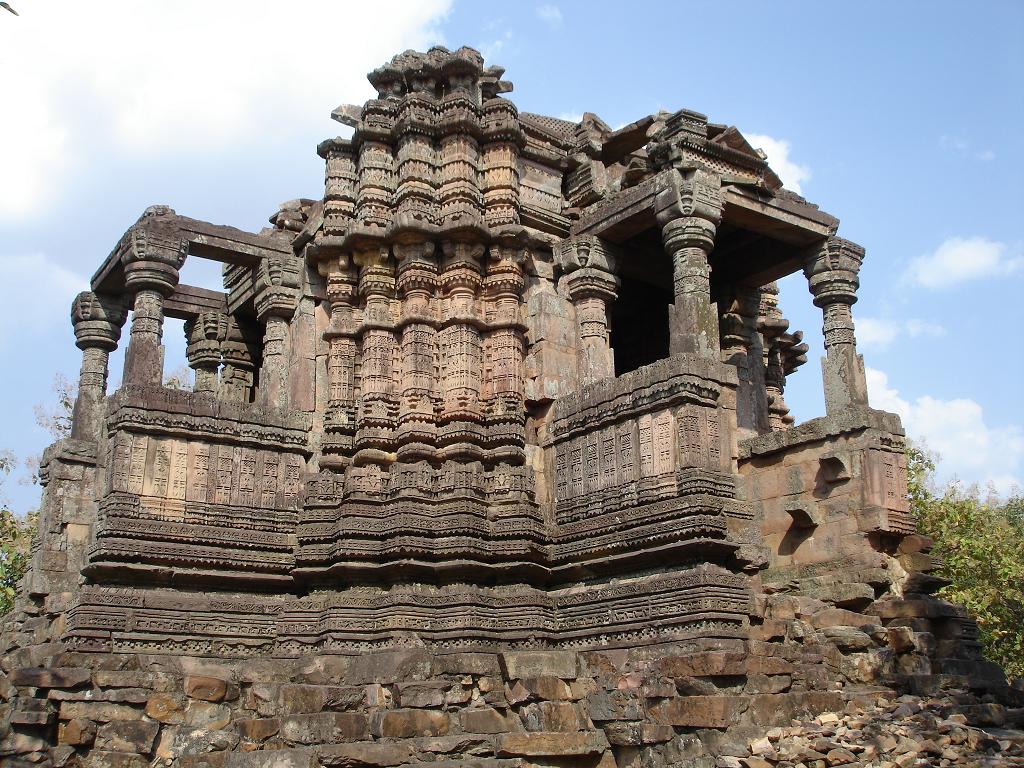
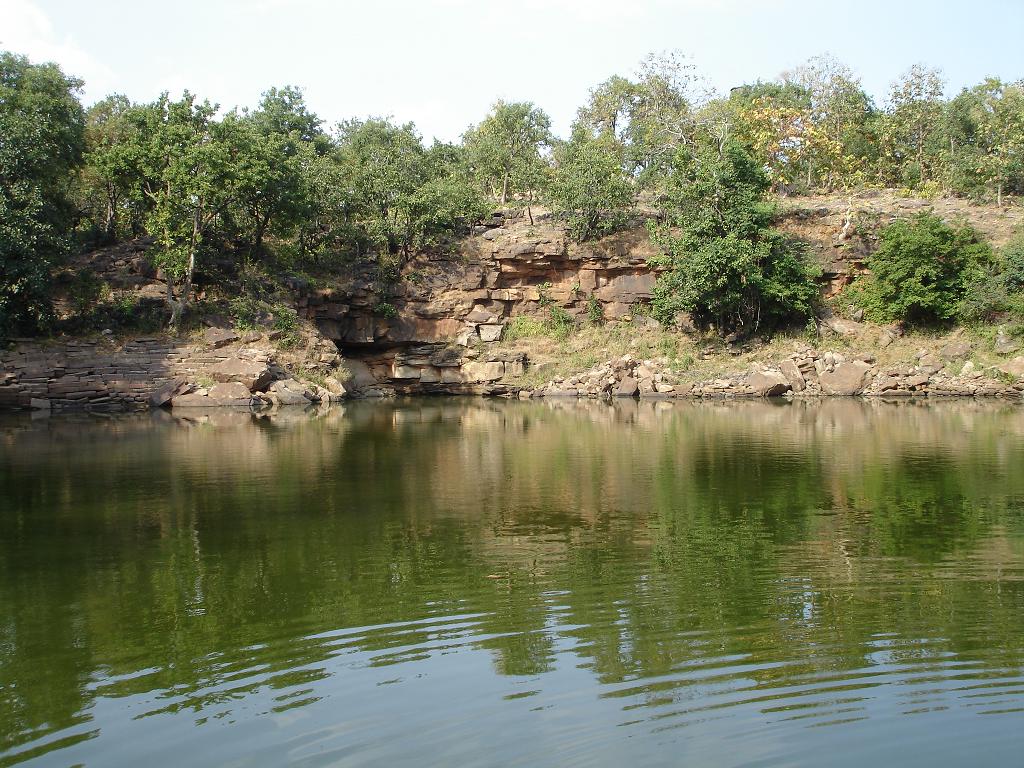
From Goa to Kolkata... I made the way through Mumbai, just for half a day, but it brought back the good memories of the first day. 15 km of slums from the train station to the center, and then, art galleries, cinemas and fancy shops in beatiful colonial buildings. Surprises never stop, that I already learned, and everything is possible in India. You can get your ears cleaned by a guy walking on the street with huge roll of cotton (didn't try this one). It's really nice, Bombay. Next, I went to Khajuraho, the country side of Madhya Pradesh, where I have good friends. Coming this place 3rd time this trip, guess it is special for me. The people are kind and beatiful, and the scenery is amazing. Abandoned palaces and temples, lakes with crystal water lost in the thick jungle, which was a setting for Mowgli's story.


Just take a motorbike and ride for 50 kms and find yourself in amazing places that are in no guide book. The weather was quite hot, and although the monsoon hit pretty hard the rest of India this year, it didn't come to these parts. The farmings suffer badly, and some weird diceases erupt. It also cause an invasion of small stinking black bugs, that are affectionnately named "Gandhi" by the locals, probably because their unagressive, but sticking character. I escaped the heat by swimming in the lakes, rivers and a dam, just few kms away from the village.


Good time, and really good memories, I'll really miss these places and these people and sure hope I'll see them again...
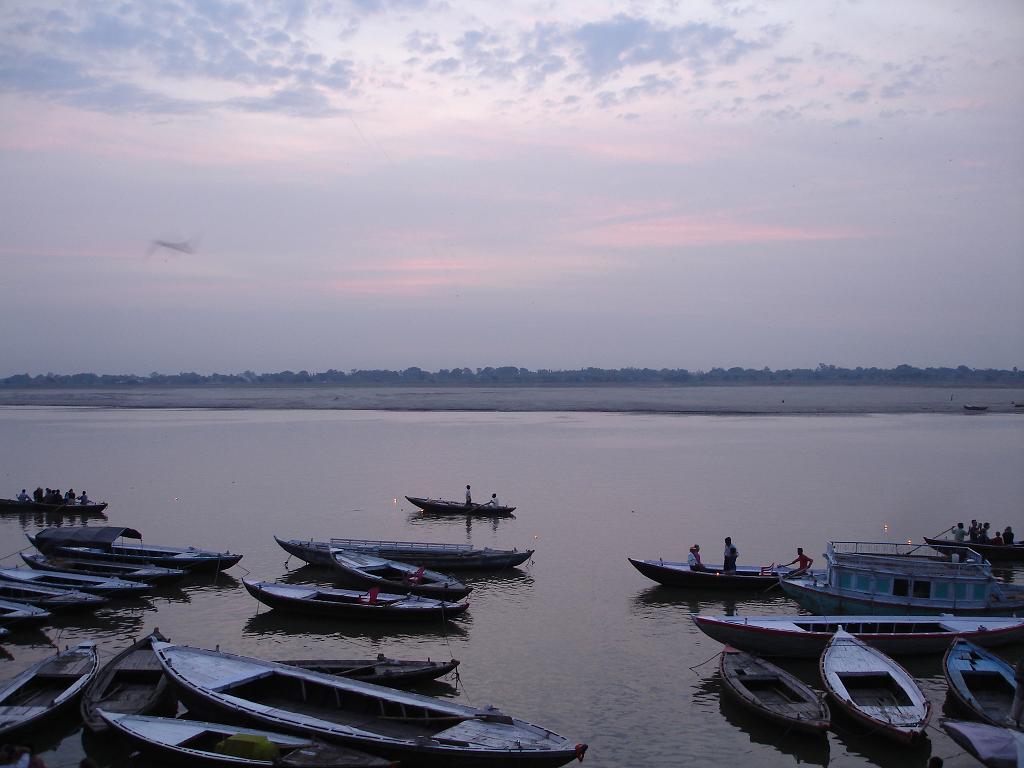
Kolkata is the next destination, but train tickets are impossible to book now from countryside. All trains are full for the next 2 weeks because of Diwali festival, which is coming tomorrow, and hundreds of millions of people apparently shift themselves all over the country. Luckily I had a connection in Varanasi, the guy succeeded in booking me a train ticket for the same day, which proves again that everything is possible, with some baksheesh. So after a night bus I got to the Ganga just in time for sunrise.


Happy Diwali!

Sunday, October 01, 2006

Palolem beach, Goa


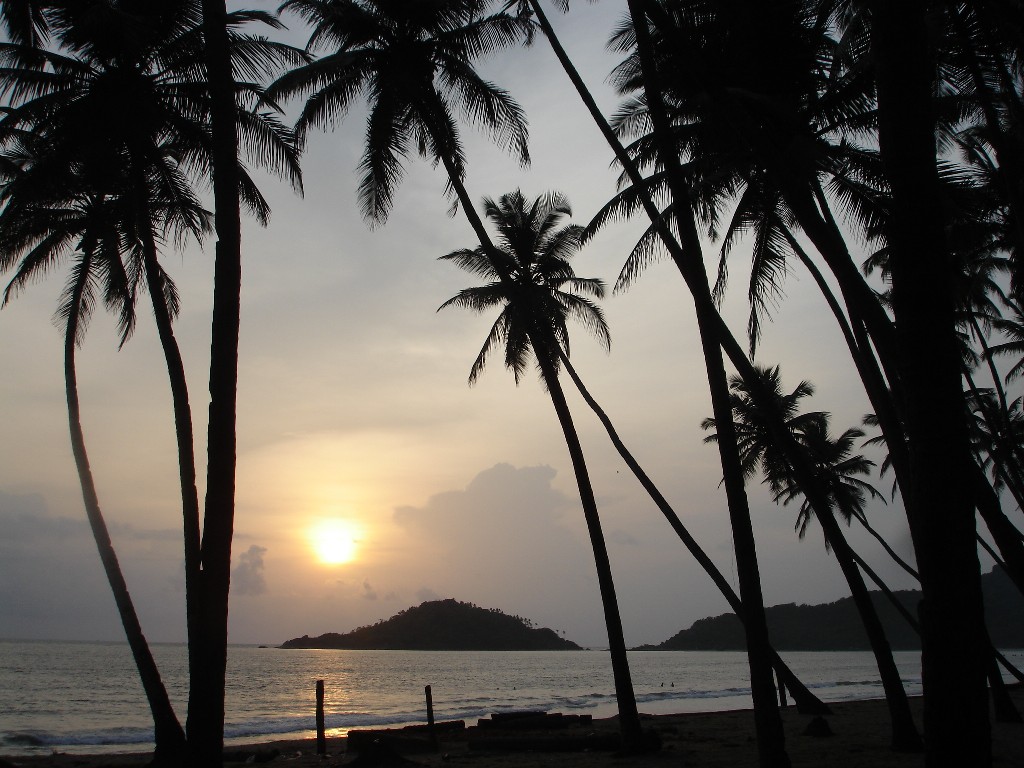
Here I am, in Goa, on a beach where a sunset looks like a postcard. I'm very busy: I do yoga at morning and then sit most of the day on the sand and think until my brains melt on the sun. Then I get in the water and swim, get out and sit on the beach again - and the process goes on. The beach looks like if a tsunami recenly passed over it: apparently, the municipality came with buldosers and destroyed illegal buildings, which used to be restaurants. I suppose it's more quiet now this way, and the season hasn't started yet although there's lots of people. Vendors of fruits and coconuts wander along the beach, so are icecream and massage wallas. It's hard to stay an hour without hearing one of them, so it's not really quiet. But there are more deserted beaches in a walking distance, it's pretty easy to escape.

Sunday, September 24, 2006

Kochin

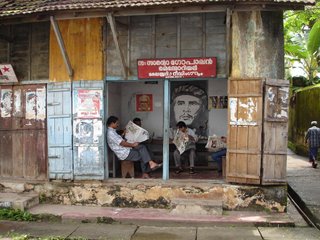
Several days in Kochin, a pleasant place. An old port town, with marks of Portuguese, Dutch and English. There are very old trees growing in the middle of pavements in the streets of the port, several griths in width, with young leaves growing from their trunks and branches. More cats on streets than dogs, and they're not afraid of people at all, although they walk cautiously. The Indians, the goats and the fish eat the coconuts pulp, I don't like it too much. Big chinese fishing nets along the dock, lifted and dipped by 5 men. The variety of sea food that they fish out is great, and very delicios, as the traditional South Indian food. The guest houses area is near two big churches - Santa Cruz and St. Francis. It's really amazing how strong is the faith of people all over India. Although the gods change, the worshipping of statues is same, and sincere. I'll never understand this. Farther right is the Bazar, there are shabby buildings, that are overgrown with moss and plants due to long time and moisture. Families live in them, spices and oils merchants hold their shops, and communist activists make their ideological work. Now they're fighting agains Coke and Pepsi (may the Force be with 'em).


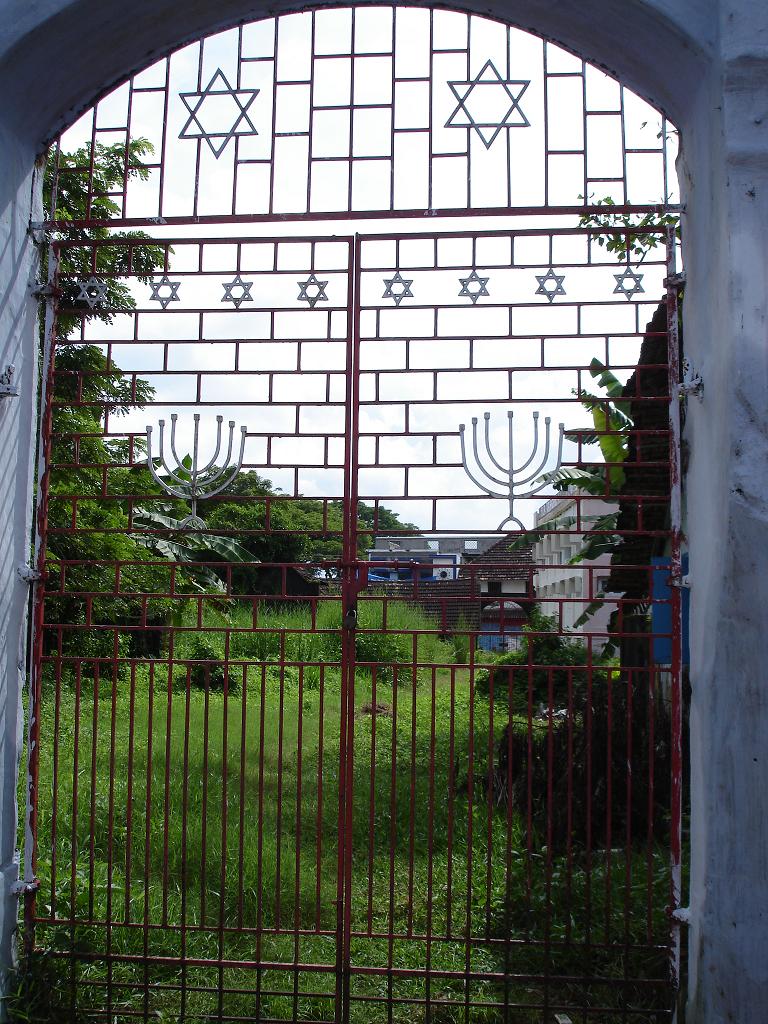
Then begins the Jew Town, although the Jews are long gone. Now it's an area of art galleries and spices market. The synagogue is still there, though, empty and light, maintained (pretty well) by Indians. On saturdays and holidays (Jewish) it's closed :)


From Kochin down south lies a big network of water channels, called backwaters, with plenty of cocunut palms and other vegetation on their shores, little houses between them, women are working on farming or collecting some plants, going up to their neck in water, never mind the snakes and all other things in it, and the tourist floating on cruise boats and watching all this stuff.
Peace and Shana Tova :)

Monday, September 18, 2006

Mangalore

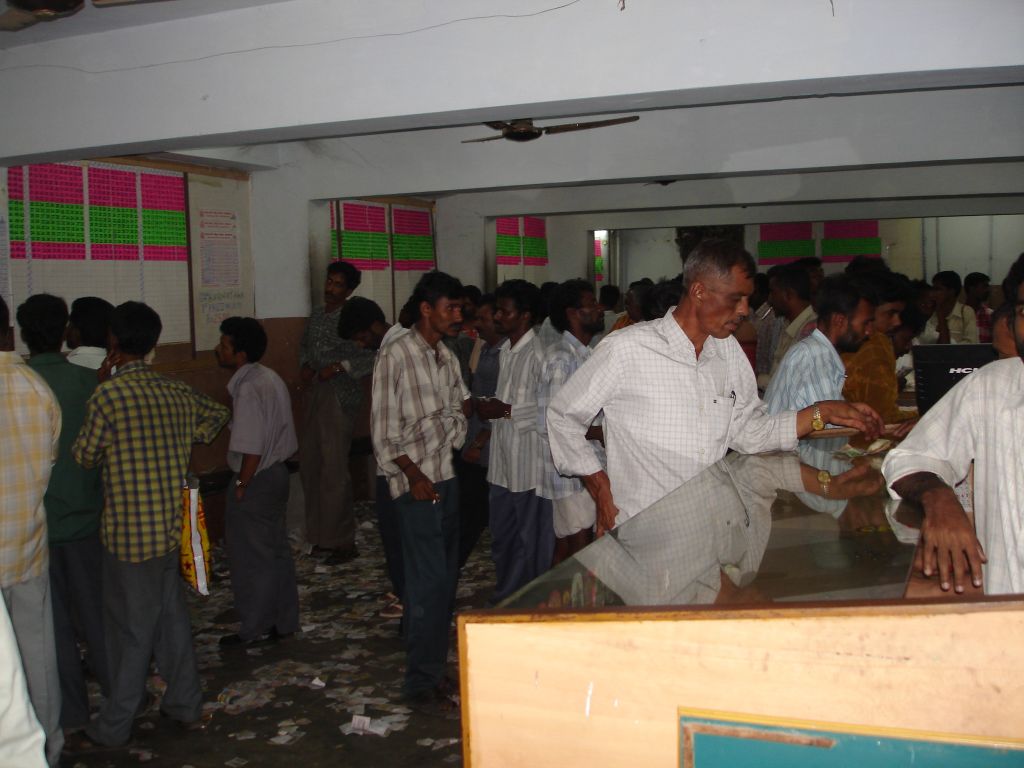
Mysore was a nice town, although I was hassled a lot, people were trying to sell me everything, from cocunuts and incense to pineapples and opium. I made sight seeing for two days. I went to the Devaraj market, full of colors and scents. I also visited an art gallery where there are some beatiful works of a Russian painter, Nicholas Roerich, who spent some time in India. At evening I wandered on the streets and got inside a gambling place. Apparently, people were trying to guess a 2-digit number to get 100 Rs. There was a lot of excitement in the air.


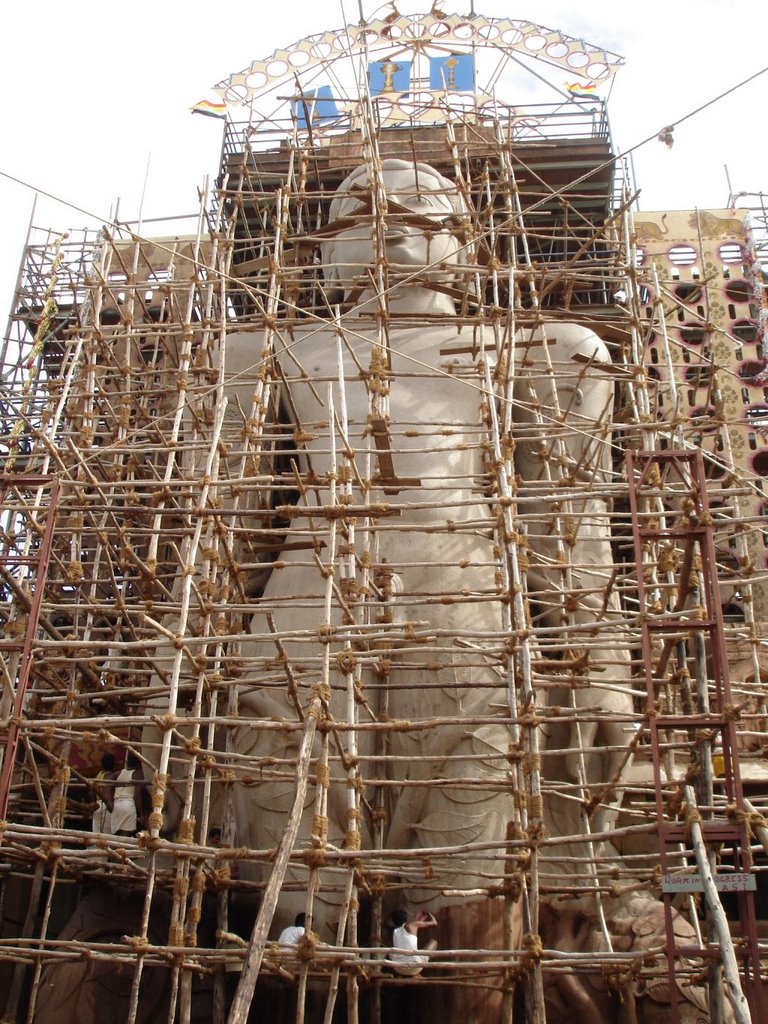
After Mysore I moved to Hassan, pretty noisy town, surrounded by villages with some nice sights. First, there is Shravalabelagola (don't know who's responsible for the name). There are two hills in the village, people are supposed to climb them barefoot. On the first, there's a complex of 14 Jain temples, and on the second, a huge monolith statue of some Jain deity, I didn't even try to remember the name. It was going through renovation, but still, looked very impressive.


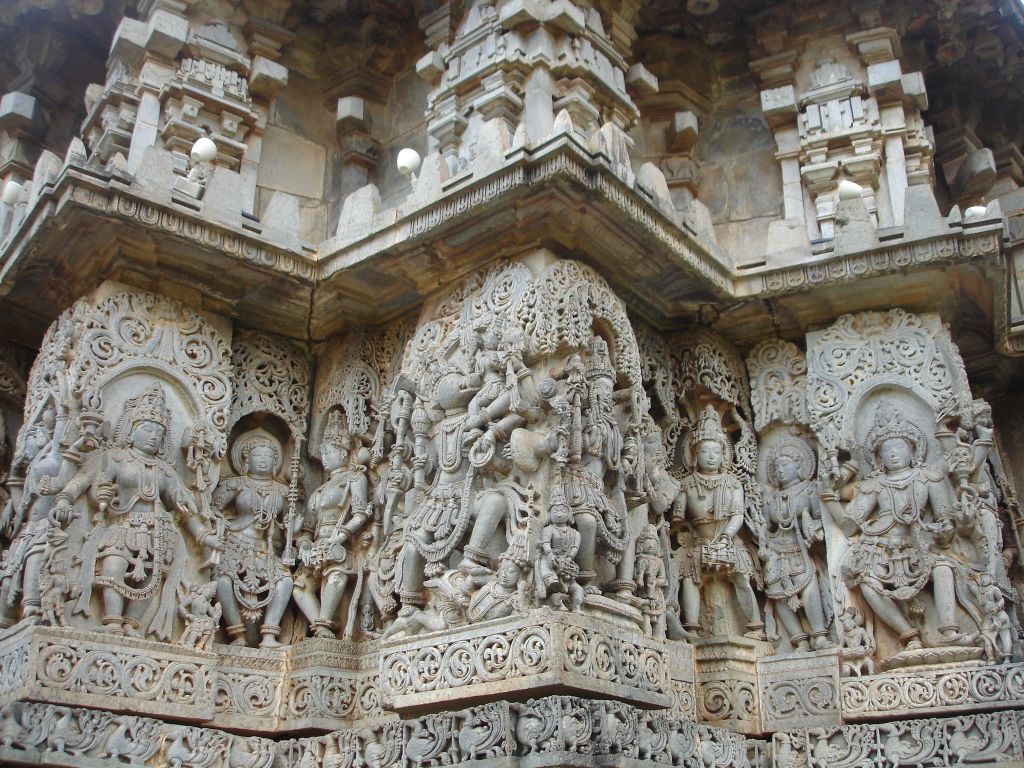
Next day I visited Halebid and Belur, two villages close by. They have Hindu temples with amazing stone carvings, so much details, great amount of precise work.


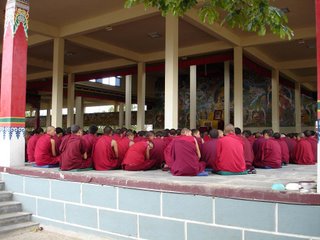
Then, I returned to Hassan and took a bus to Kushalnagar. It surprised me to find out there are Tibetan settlements in Karnataka. The Tibetans are very kind and peaceful people. The monasteries are quite big, there are thousands of monks around.


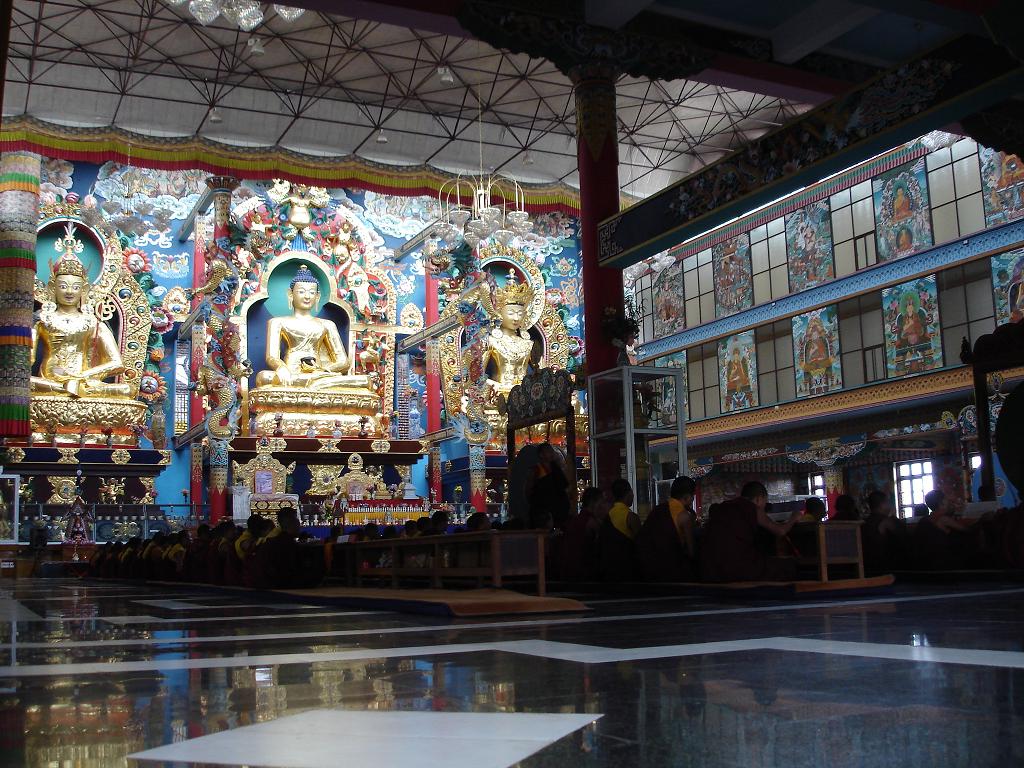
There are few temples in the monasteries, the biggest is the Golden temple, which has a huge hall with giant statues of Buddha and 2 other guys, I'm not so good with names :) When I got there, there was a morning ceremony, hundreds of monks were sitting and chanting, some hit the gongs, some played flutes, all very synchronized, so the noise had its charm.


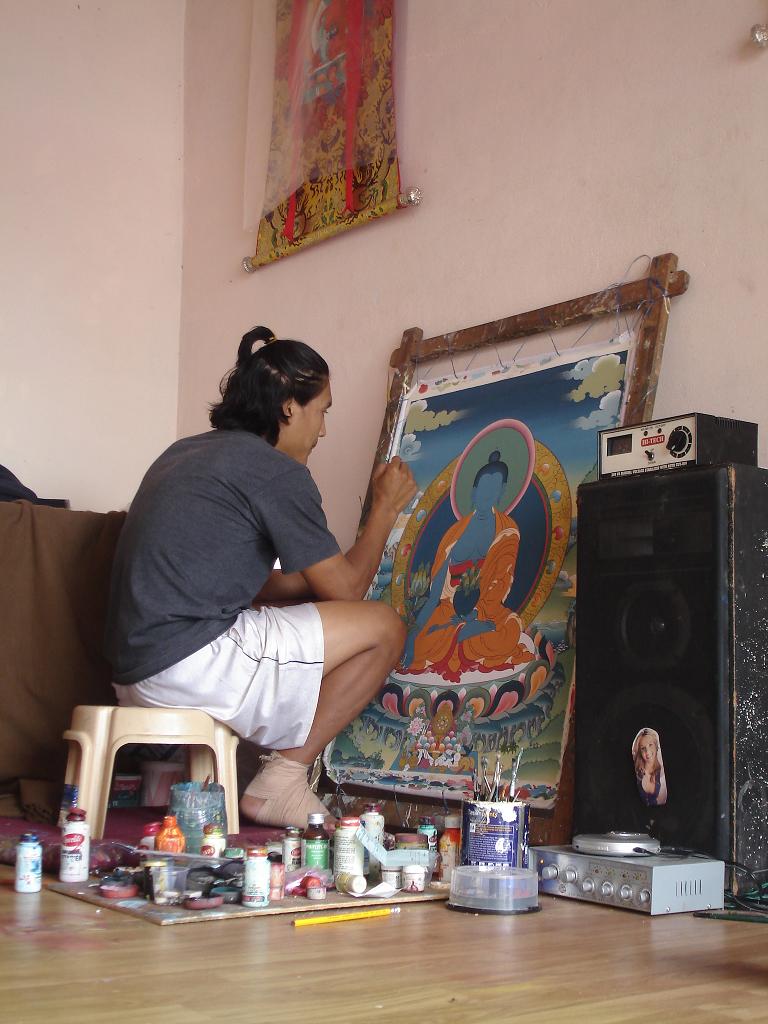
I got to speak to a friendly monk, named Ngaway, he showed me around and was very nice. The settlements are a refreshing change from the rubbish of nearby Indian villages. The secular Tibetans work hard, some of them make beatiful art stuff, carpets and thanka paintings.


The next day I got on a bus to Mangalore, a big modern town on the west coast. It's a mix of religions here: I've seen catholic nuns and women covered with burka on the streets. I finally found a relatively cheap air tickets from Calcutta, so October 24 challo Bangkok! :) Tomorrow heading south, to Kerala state.

Damn't, I can't believe I gotta edit HTML!!!

Tuesday, September 12, 2006

Mysore

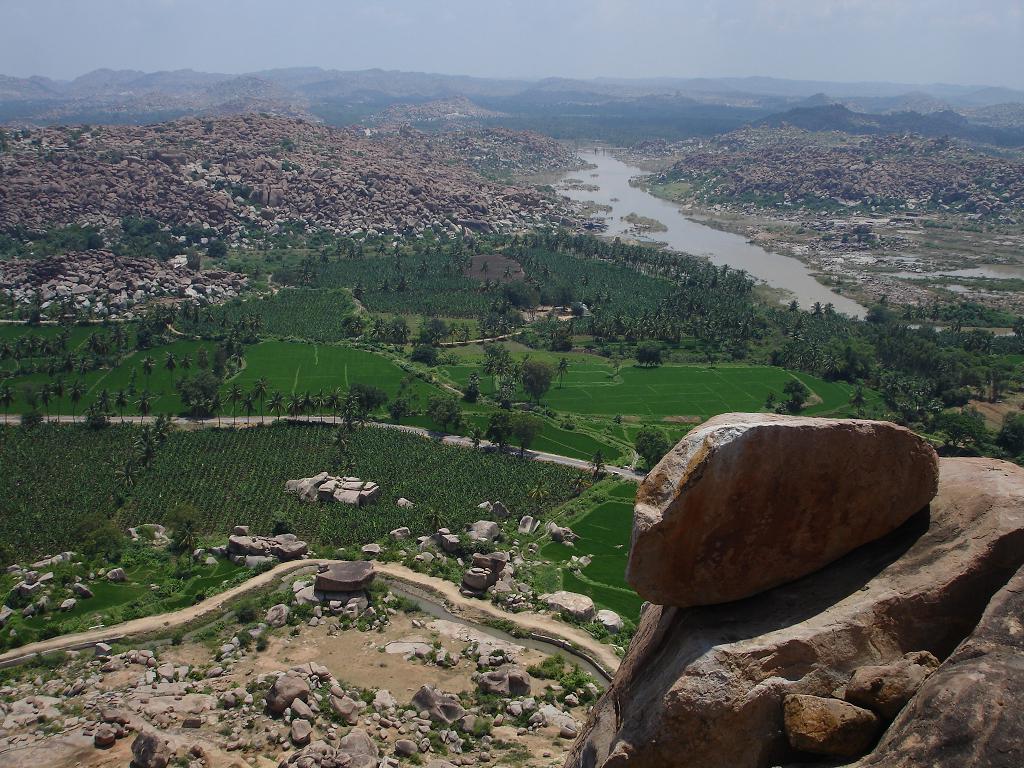
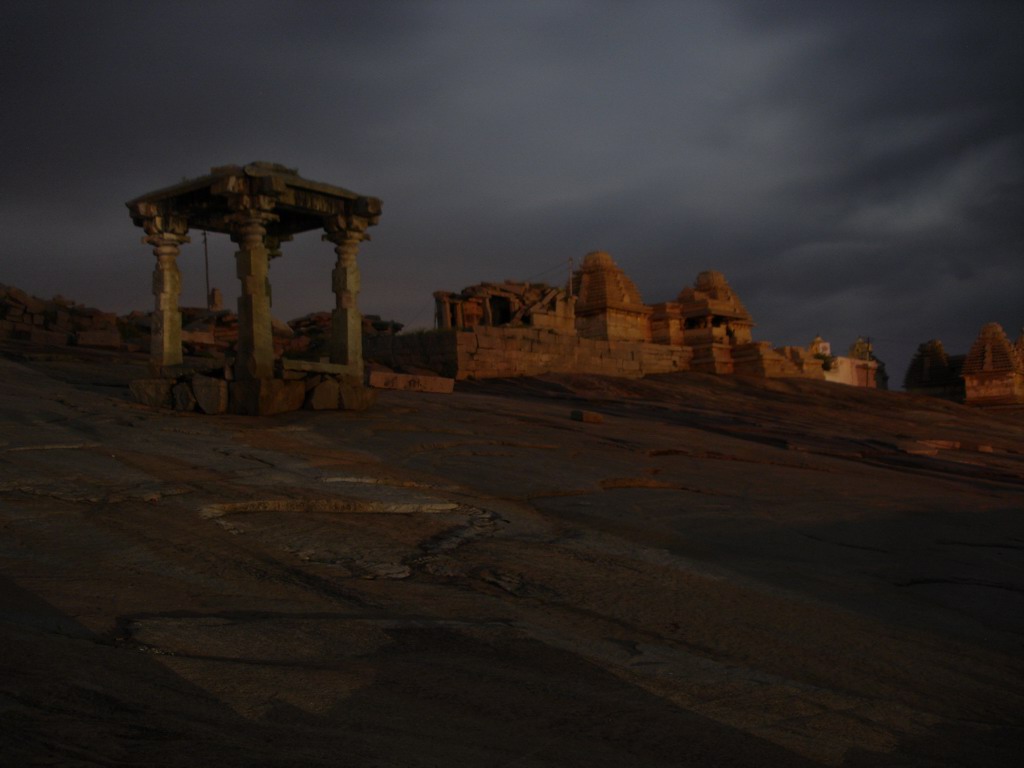
Exploring the ruins in Hampi wasn't an easy task, because of the huge area and the heat. In the 4 days I spent there, climbing the boulders' hills and discovering new temples and buildings of the ancient city, I never got bored. On the second day, I crossed the river, walked through rice and banana fields and climbed 500 stairs up to Hanuman (monkey god) temple. There were lots of monkeys on the way, I gave some bananas to the small ones, and then the big ones came, they were really rude. In the temple lives a friendly baba, a young guy, he speaks well English and is fun to talk to. The views from up there are great, as far as one can see there are boulders in piles, and the buildings seem really small compared to them.


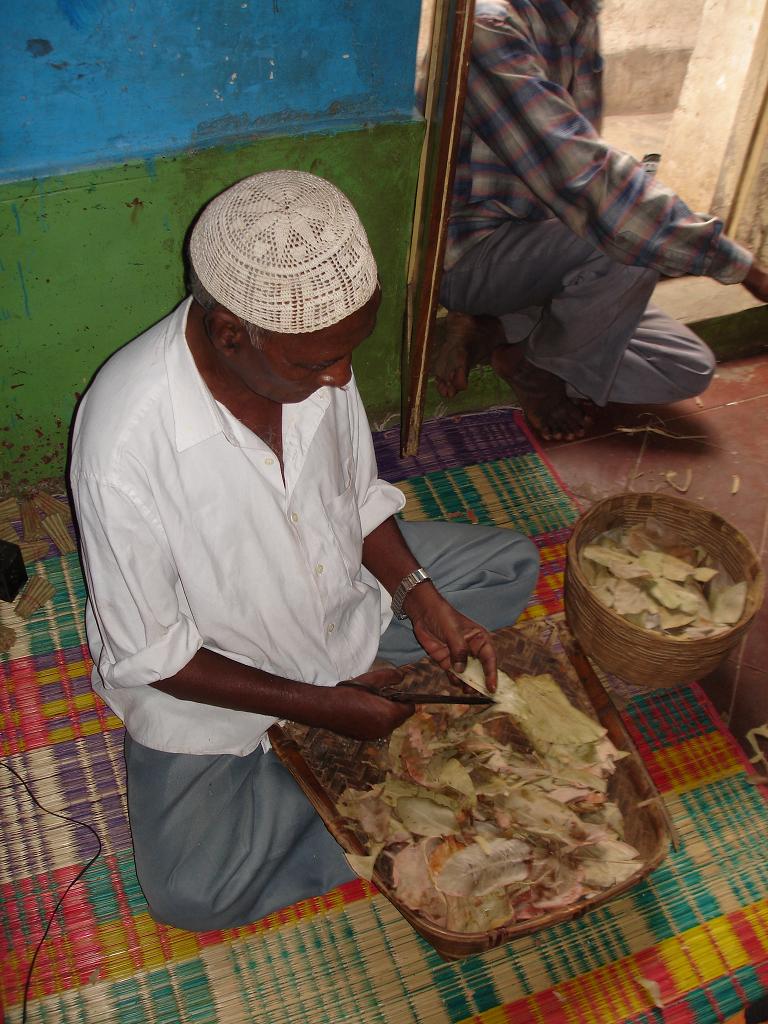
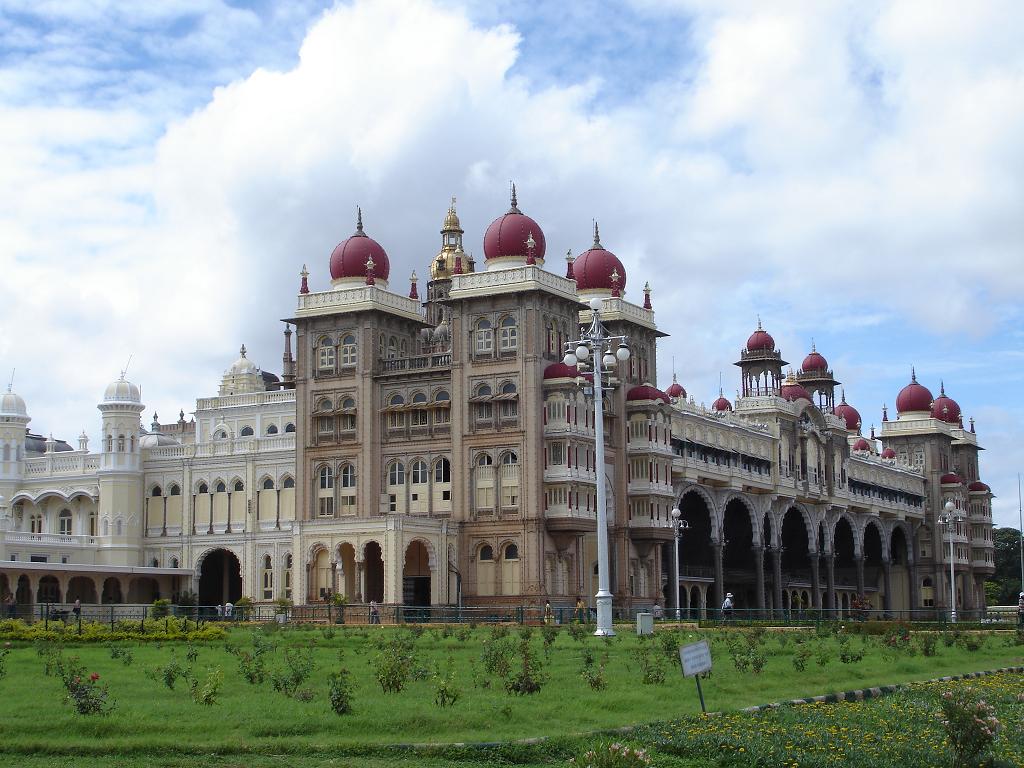
Hampi has so much energy, just sitting under one of these rocks gave me vibrations. I left yesterday on a night train, the ticket was to Mysore, which involved changing trains in Bangalore, the high-tech city of India. I thought about leaving my bag in the cloak room, explore the city for a while and catch a train to Mysore. The station was going through some renovation works. In India it means people have to walk over the renovation site. Hundreds of people coming out of the train, crowded together on the stairs without banister, trying to get out of the platform. As soon as I got out, I took the train to Mysore which was leaving in a few minutes. So much high tech for me, although the plasma screens in the waiting hall of the station were nice. I got to Mysore around 11. Mysore is known for manufacturing sandal wood oil, the maharaja's palace and the ashtanga yoga centre. Since I have no time to learn yoga now, I went to the other attractions. A friendly rikshaw driver took me to the working people quarter, where I witnessed the process of making beedees, the Indian hand rolled cigarettes. It was cool, the guys work with speed of a machine, making thousands of pieces in a day.


After visiting an oil shop I came out with my sense of smell in a state of shock, the guy poured so much different sorts of oil on me. Then I went to the palace.


The architecture was impressive, vast halls with gold decorations, beatiful wood furniture, paintings and statues. The paintings were made in a Victorian style, the maharaja, maharaja's wife and their children in various combinations, all looking very rich and stiff. I really didn't like the big elephant tusks on the walls. Very bad karma.

Friday, September 08, 2006

Hampi

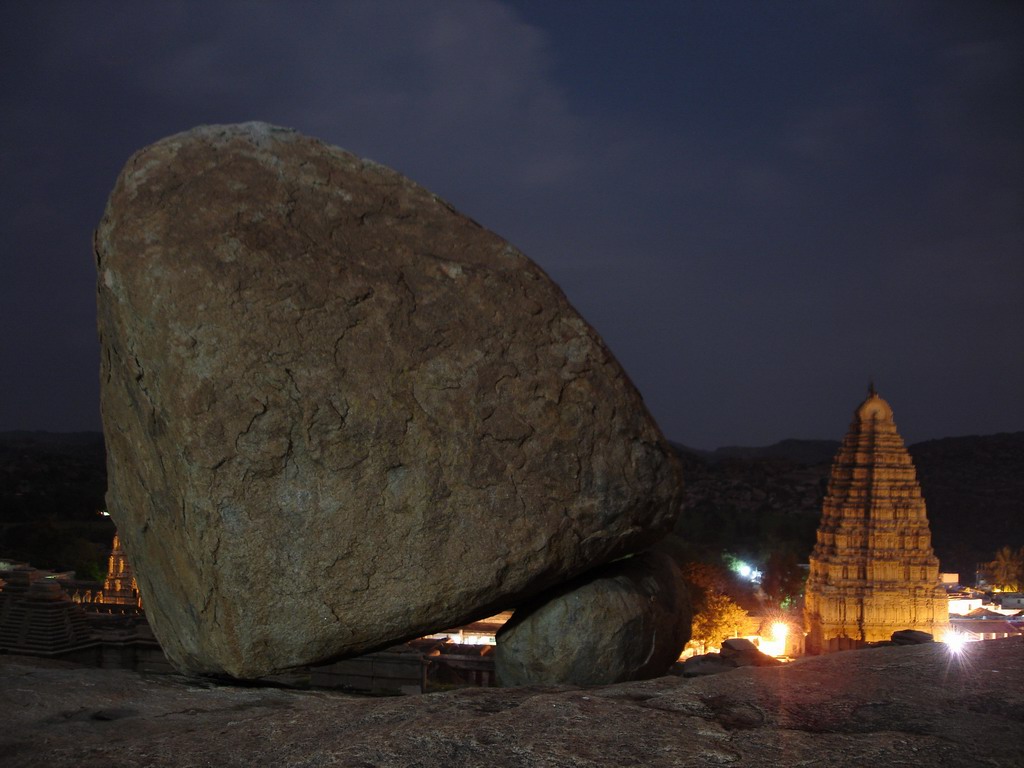
After a few days in Kutle beach I decided to move on. The next destination was Hampi, a village with ruins of an ancient Hindu empire capital. It's located more than 200 km east from Gokarna, and there's only a local bus in low season. It was a long journey, but since the road was flat, it was ok. The place is amazing, the ruins are spread around a huge area, impressive temples and hundreds of gigantic boulders.


It's hard to believe humans did this amount of work, especially in the ancient times. There was a full moon yesterday, and also a lunar eclipse, the sky was full of lightenings and the whole scene seemed to be taken out of some fairy tale.

Tuesday, September 05, 2006

Gokarna

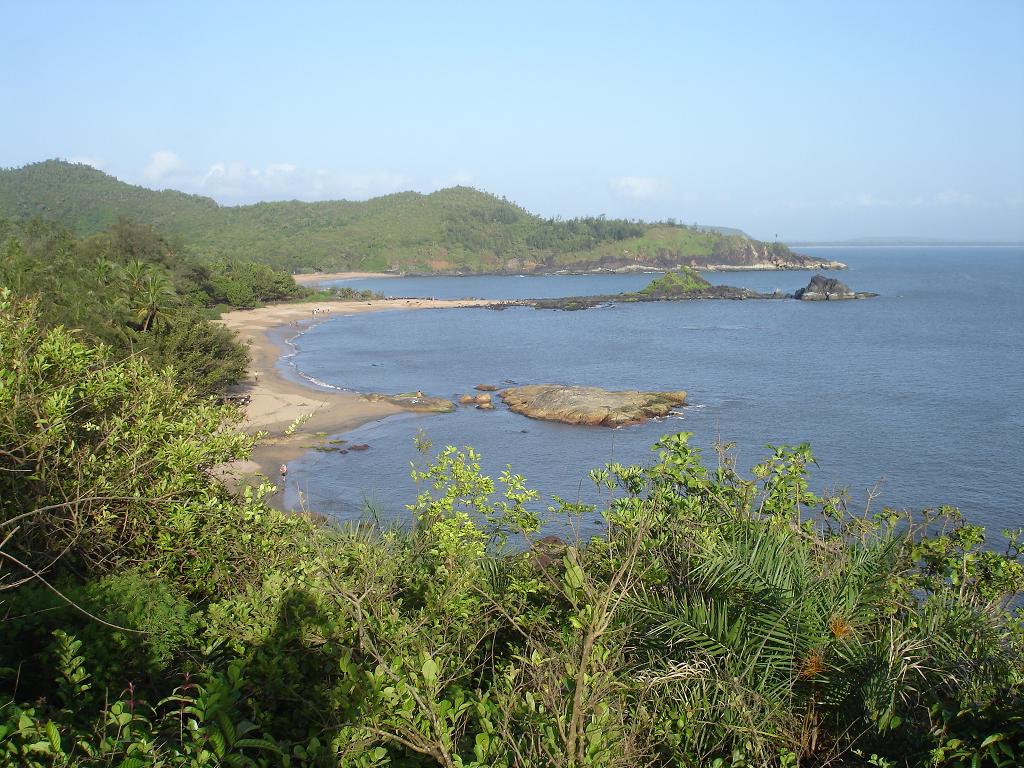
I spent 2.5 weeks in Dharamkot. It's hard for me to stick to one place, so I learned some music (flute and table) and also some Hindi to keep my days busy. The weather was very wet, it rained most of the day. I made some thinking where to go next. September is supposed to be really beatiful for trekking in the north, the monsoons are just over, the air is clear and the views are amazing. The south is on low season now. I decided to go south. I loved the mountains of the north, and still I think these places are the most beatiful parts of land we've got, but I needed a break from them. I've got until end of October to hang in India, and I wanted sunshine, heat and ocean. I travelled on the night bus to Delhi and dropped most of my stuff there, and then a 2 days train down south. I got a sleeper ticket and it was a great journey. People were passing all the time, sellers of food, drinks, faked jewellery, magazines etc., and lots of beggars too, mostly children, sometimes cleaning the floor or doing acrobatic exercises in the narrow aisles, also old women and crippled people. If I got change, I gave them. The train crossed places I visited half a year ago on my way north, on the second day morning it entered Mumbai, in few hours it went through Goa and around midnight I got off in the south, a town named Karwar, in the northern edge of Karnataka state. I spent the night on the train station and went to Gokarna on the morning, switching buses on the way (luckily, very short rides). I was very excited and happy when I saw the ocean at least. The weather was beatiful, few people were around. First I was in Om beach, which is shaped like the Om symbol.


It's a 3 km walk, sometimes in the jungle, to the town of Gokarna. Then I moved to Kutle beach, closer to the town and cheaper too. The town is quite religious, in the Hindu way. I saw many brahmins with white marks on their foreheads and their unique dressing. There was a festival the day I've arrived, dedicated to Ganesh, the elephant god. A procession of kids carrying flags, some men with drums and flutes were playing and others dancing, and 4 guys were carrying a statue of the god. They moved slowly along the street and stopped from time to time, so that more people would join the party. Finally they went to the beach and threw Ganesh to the ocean. Why like this?
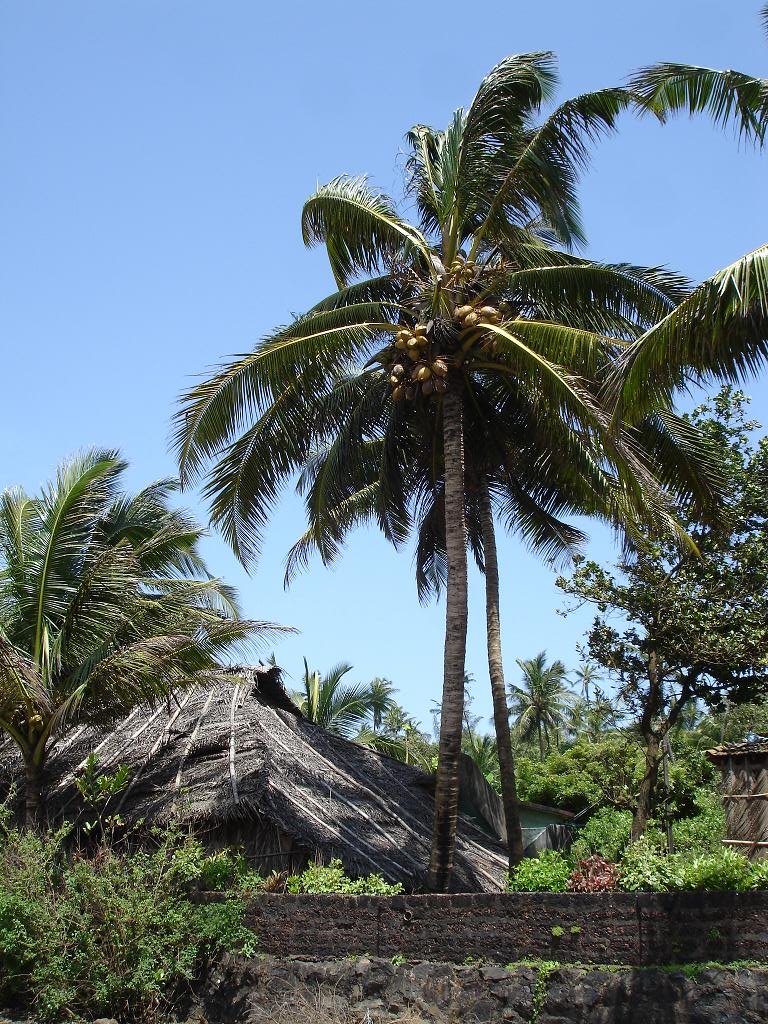
Anyway the south is great, although it's low season, and maybe because of it. The water in the ocean is muddy, but it's very pleasant to swim. And they got all these tropical stuff: papayas, pineapples, coconut so I don't have to go far away to get some exotic shake.


Bom